Dr. Christoph Striecks
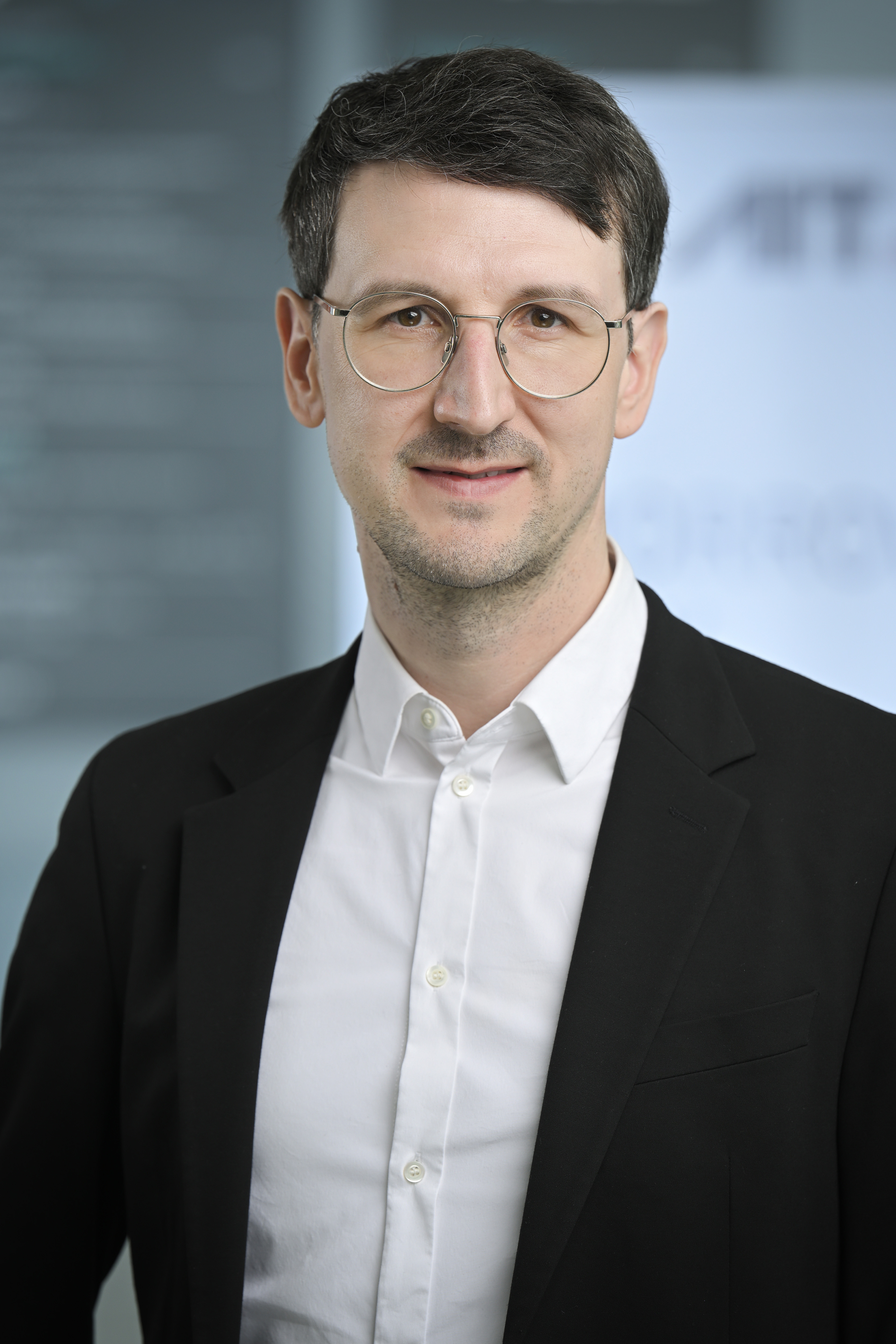
I am a senior scientist specialising in the design and analysis of secure communication systems, with a focus on cryptographic protocols and primitives – particularly key exchange, encryption, data access control, and authentication. My most recent work centers around advancing quantum-safe hybrid cryptography to achieve long-term security for next-generation communication infrastructures.
Moreover, I actively contribute to standardisation efforts at ETSI and CEN/CENELEC – including my current involvement in ETSI STF 684 (standardising quantum-safe hybrid authenticated key exchange) and my past role in ETSI STF 529 (standardising attribute-based cryptography).
Academic & professional background
In 2016, I joined the AIT Austrian Institute of Technology, Austria’s largest research and technology organisation. Before, I held a postdoctoral position at the Karlsruhe Institute of Technology (KIT) in Germany.
In 2015, I earned my PhD (Dr. rer. nat.) in Cryptography from KIT under the supervision of Prof. Dennis Hofheinz (now at ETH Zurich). My PhD research focused on advanced cryptographic building blocks with an emphasis on security proofs. During my time at KIT, I also contributed to teaching, including Algorithms I (lab, 2015) and IT Security (lab, 2013), as well as seminars and additional lab sessions.
In 2010, I completed my Diploma (Dipl.-Inf.) in Computer Science at the Technical University of Braunschweig, with a focus on cryptography and software engineering. During my studies, I had the opportunity to particpate in an internship with Siemens USA in Princeton (2008).
News & activities
- Sept. 2026: I am honered to have been part of the PhD Thesis Defense Committees of Rafael Juan Vicente García (07/26) and Rubén David Brito Méndez (09/26) from the Universidad Politécnica de Madrid. Moreover, I acted as an external reviewer for their theses.
- Jul. 2026: I am happy to serve on the PKC 2027, QCNC 2027, and SSR 2026 program committees.
- Jun. 2026: I gave a talk on "Developing quantum-safe hybrid cryptographic standards" at the ETSI/IQC Quantum Safe Cryptography Conference 2026 in Ottawa on 17 June 2026.
- May 2026: Accepted paper on quantum-safe hybrid key exchange assessment for dual-use applications in the EPJ Quantum Technolgies journal.
- Apr. 2026: I contributed to a podcast on the challenges of quantum computing (recording from 2025 in German).
- Jan. 2026: I will give an invited talk at the workshop Q-PrEP 2026: Quantum Readiness in Practice in Athens on 5 February 2026.
- Sep. 2025: Accepted paper on hybrid key exchange with KEM-based authentication in the EPJ Quantum Technolgies journal. A preprint is available here.
- June 2025:
- I gave an invited presentation on the transition to quantum-safe networks at the World of Quantum Application Panel "Quantum-Safe Communication".
- We are happy to announce that the Workshop on Quantum-Safe Hybrid Cryptography concluded successfully.
- Accepted paper on versatile quantum-safe hybrid cryptography in the EPJ Quantum Technolgies journal. A preprint is available here.
- I gave a presentation on quantum-safe hybrid authenticated key exchanges at the ETSI/IQC Quantum Safe Cryptography Conference 2025.
- May 2025: I gave a presentation on quantum-safe hybrid key establishment at the Workshop on Quantum-Resistant Cryptography – an EUROCRYPT 2025 affiliated event.
- Apr. 2025: Accepted talk on hybrid authenticated key establishment at ETSI/IQC Quantum Safe Cryptography Conference 2025 in Madrid in June.
- Jan. 2025: Accepted paper on malleable SNARKs and their applications at Eurocrypt 2025.
- Jan. 2025: I am currently co-organizing a workshop on Quantum-Safe Hybrid Cryptography (under the umbrella of ACNS'25).
- Bloom Filter Encryption and Applications to Efficient Forward-Secret 0-RTT Key Exchange(A* Core Rank) Advances in Cryptology - EUROCRYPT 2018 - 37th Annual International Conference on the Theory and Applications of Cryptographic Techniques, Tel Aviv, Israel, April 29 - May 3, 2018 Proceedings, Part III
Organising activities:
- Quantum-Safe Hybrid Cryptography 2025 (co-organising)
Current projects:
- HarmoniQCI (Project coordinator, Digital Europe Program 2026-2029)
- MOZART (Project coordinator, KIRAS/K-PASS 2026-2028)
- ETSI STF 684: Quantum-Safe Cryptographic Solutions (QSCS) (ETSI 2025-2027)
- Quantum Secure Networks Partnership (QSNP) (EU HORIZON-RIA 2023-2026)
Completed projects:
- QCI-CAT (Digital European Program, 2022-2026)
- PETRUS (Digital European Program, 2022-2025)
- EDOCC (European Defence Fund, 2022-2025)
- TeamAware (EU HORIZON 2020, 2021-2024)
- PROFET (FWF, netidee SCIENCE, 2019-2023)
- COMP4DRONES (EU HORIZON 2020, ECSEL, 2019-2023)
- SECREDAS (EU HORIZON 2020, ECSEL, 2018-2021)
- IoT4CPS (FFG and BMK, ICT of the Future, 2017-2020)
- PRISMACLOUD (EU HORIZON 2020, 2015-2018)
- CREDENTIAL (EU HORIZON 2020, 2015-2018)
Research visits:
- Sorbonne Université/CNRS (Prof. Ludovic Perret, now at EPITA, 12/2024)
- Friedrich-Alexander-Universität Erlangen-Nürnberg (Prof. Dominique Schröder, now at TU Vienna, 12/2022)
- ETH Zurich (Prof. Dennis Hofheinz, 09/2022)
- Royal Holloway, University of London (Prof. Martin R. Albrecht, now at King's College London and SandboxAQ, 10/2018)
- Paderborn University (Prof. Tibor Jager, now at Bergische Universität Wuppertal, 03/2017)
Supervision & teaching:
- PhD defense committees: Rafael Juan Vicente García (Technical University of Madrid, Sept. 2026), Rubén David Brito Méndez (Technical University of Madrid, Jul. 2026)
- PhD external reviewer: Rafael Juan Vicente García (Technical University of Madrid, Sept. 2026), Rubén David Brito Méndez (Technical University of Madrid, Jul. 2026)
- PhD visitor: Jaime S. Buruaga (Technical University of Madrid, Jul.-Oct. 2024)
- Master student: Augustine Bugler (University of Vienna, Mar.-Jun. 2026)
- Recent students & interns: Augustine Bugler (University of Vienna, Jul.-Sep. 2024, Mar. 2025 - Feb. 2026), Kevin Verhaeghe (ETH Zurich, Jul.-Sep. 2024), Alexander Zikulnig (TU Vienna, Aug.-Sep. 2022)
- Teaching: Advanced Public-Key Encryption (invited lecture, WT 2020, TU Vienna), Advanced Public-Key Encryption (invited lecture, WT 2019, TU Vienna), Algorithms I (TA, ST 2015, KIT), Gems of Theoretical Computer Science (ST 2014, KIT), IT security (TA, ST 2013, KIT), Software Development (WTs 2010-2012, KIT), Traitor Tracing (WT 2011, KIT), Identity-Based Encryption (ST 2011, KIT), Practical Cryptography (ST 2011, KIT), Lattice-Based Cryptography (WT 2010, KIT), TA programming and cryptography/IT security (until WT 09, Braunschweig University of Technology)
Recent program committees:
- International Conference on Practice and Theory in Public Key Cryptography (PKC) 2027
- International Conference on Quantum Communications, Networking, and Computing (QCNC) 2027, 2025, 2024
- International Conference on Cryptology and Network Security (CANS) 2025, 2024, 2023, 2022
- Security Standardisation Research Conference 2026, 2025, 2024, 2023
- IMA International Conference on Cryptography and Coding 2019
- ICISSP 2025, 2024
- GI SICHERHEIT 2024, 2022 & 2020
Selected external reviewing activities: